
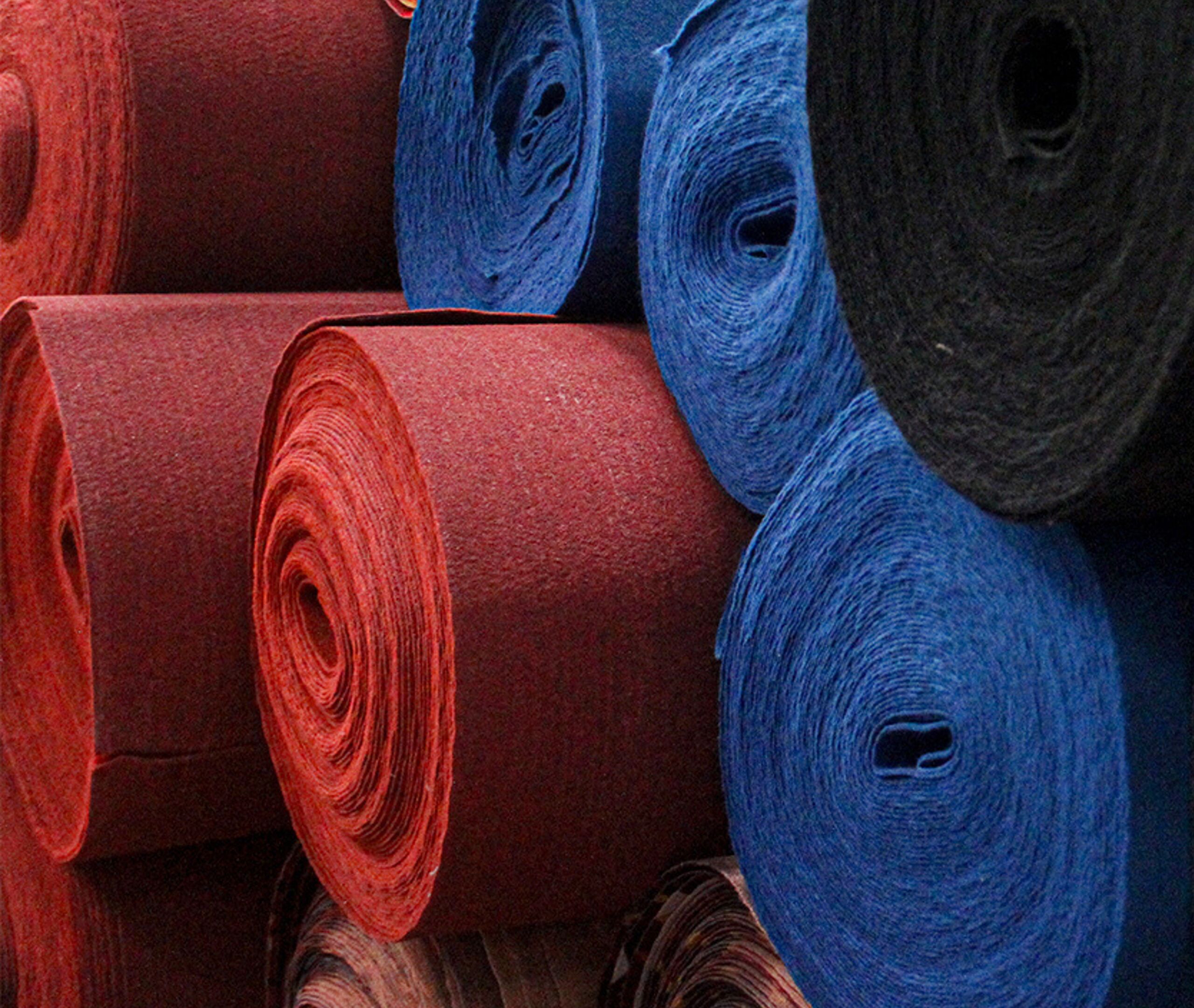
Geotextile Fabric Sheet Price Per Square Meter: 2026 Cost Guide
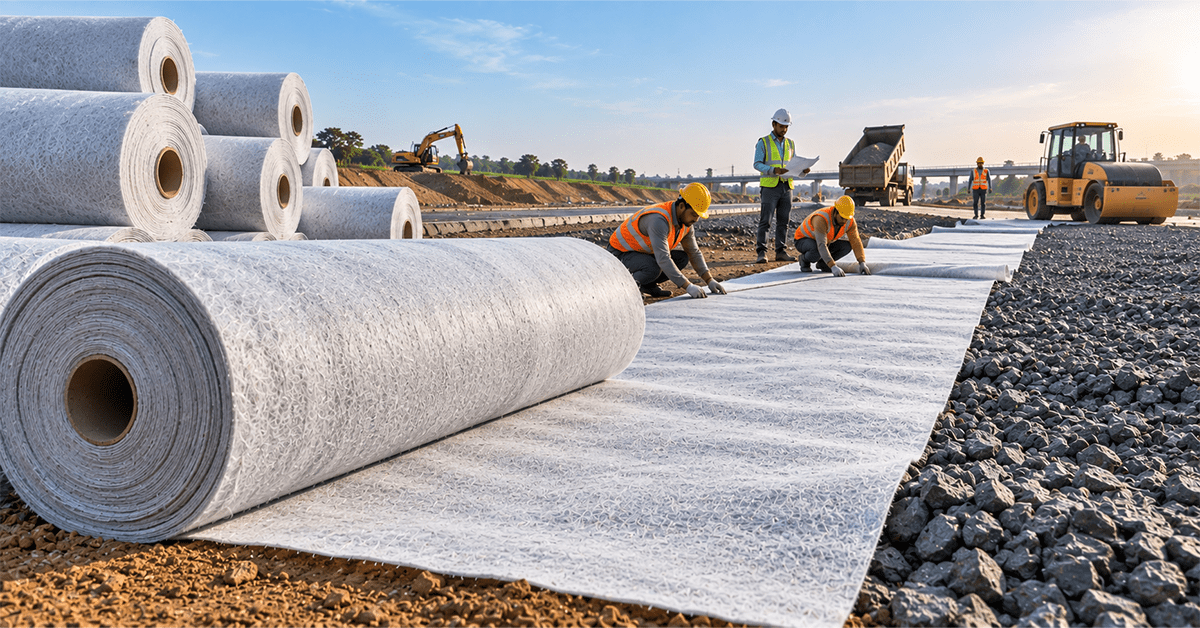
Geotextile Fabric Sheet Price Per Square Meter: 2026 Cost Guide
Geotextile fabrics have widespread use in road construction, drainage systems, railways, landfilling, erosion control, and many more such infrastructure projects. It is extremely important for both the contractors and the procurement team to be aware of the geotextile fabric sheet price, as budgeting will have to be done according to that for the project.
The brand under which Supreme Geotech manufactures the geotextile fabric sheets is known as SuperGeo. They produce non-woven geotextiles and use polypropylene or polyester staple fibres to manufacture the geotextile fabric sheets via needle punching technology.
What Determines Geotextile Fabric Sheet Price?
The cost differs from one sheet of geotextile to another depending on various factors.
1. GSM and Thickness
The weight of the material is measured in GSM, which stands for grams per square metre. The geosynthetic products by Supreme Geotech offer GSM from 90 up to 1,200 with thickness between 0.85 mm and 5.6 mm. Projects that require thicker fabrics will have higher costs compared to projects that require thinner ones.
2. Raw Material
The non-woven geotextile products manufactured by Supreme Geotech are made of either polypropylene or polyester staple fibres. This decision is determined by the nature of the work to be done and hence affects the geotextile fabric sheet price.
3. Fabric Width
The need for a particular width can influence the cost involved when purchasing and installing the product. Supreme Geotech produces non-woven geotextiles that come in sheets up to 5 metres wide.
4. Project Requirements
The right geotextile needs to be selected on the basis of soil, hydraulic conditions, and expected loading on the installation. Selecting a geotextile only based on the cost may not serve the purpose of its intended function. According to Supreme Geotech, geotextiles should be selected according to engineering specifications of each project.
Geotextile Fabric Cost for Road Construction
The geotextile fabric cost for road construction is determined by fabric specifications, total area needed, and transportation/installation needs.
Geotextiles are commonly used in road works for the purpose of separating and stabilising the construction process. Geotextile membrane can be placed between the soil and aggregate in order to separate the two materials with water permeability. It might be helpful in maintaining the integrity of the road construction.
SuperGeo non-woven geotextiles are manufactured by Supreme Geotech for road construction and national highways, roadside footpaths, and other infrastructure projects. Drainage applications include fabrics that permit the flow of water but retain soil particles.
In the process of purchasing the fabrics, the total amount of fabric in terms of total square metres required before making price quotations is helpful. Comparing similar fabrics based on GSM, thickness, and performance requirements is equally significant as compared to price per square metre.
Understanding the Cost Beyond the Fabric
Price is not the only factor when it comes to calculating the cost of the project. Transporting, installing, cutting, and the amount of fabric that will be needed must be taken into consideration by contractors.
Take note of the right width of the fabric so that there will be less waste during cutting. The fabric must be properly installed to protect it from any form of damage before being covered. As per advice from Supreme Geotech, the installation area must first be levelled off.
Moreover, a geotextile suited for the purpose of the project can provide drainage, filtration, separation, stabilisation, and erosion control.
Why Choose Supreme Geotech?
Supreme Geotech runs a factory in proximity to Kolkata in West Bengal, having needle punching machines and testing laboratories. The SuperGeo product line comprises non-woven geotextile using polypropylene and polyester staple fibres.
Different GSM, thickness, and width options are available as per the need of projects. Geotextiles can be used for several purposes, such as roads, railways, drainage, landfills, tunnels, ports, riverbeds, and coastal areas.
Conclusion
The geotextile fabric sheet price per sqm is dependent on the GSM, thickness, material used, width, amount required, and project requirements. Rather than choosing a product solely based on its price quote, the contractor may find it useful to check whether the fabric fulfils the functional requirements of the project.
SuperGeotech manufactures SuperGeo nonwoven geotextile with varying specifications for use in the construction of roads, drainage, soil stabilisation, filtration, and erosion control. Selecting the right specification from the initial stage will be a key step towards material and cost management.
Which GSM geotextile would suit roads?
The appropriate GSM depends on soil type, loads and the intended purpose of the fabric. The appropriate specification would depend on the engineering needs of the project, not the cost alone.
Is polypropylene geotextile or polyester geotextile less expensive?
The cost will vary depending on the specification of the product. It is important to choose the fabric depending on the needs of the project, not the cost alone.
Can geotextile fabric sheets be customised in terms of width?
Yes, geotextile fabrics come in different widths depending on the product used. The width of geotextile fabrics ranges from 5 metres as per the products mentioned above.
Geotube Installation Process: A Step-by-Step Guide for Contractors
Geotube Installation Process: A Step-by-Step Guide for Contractors
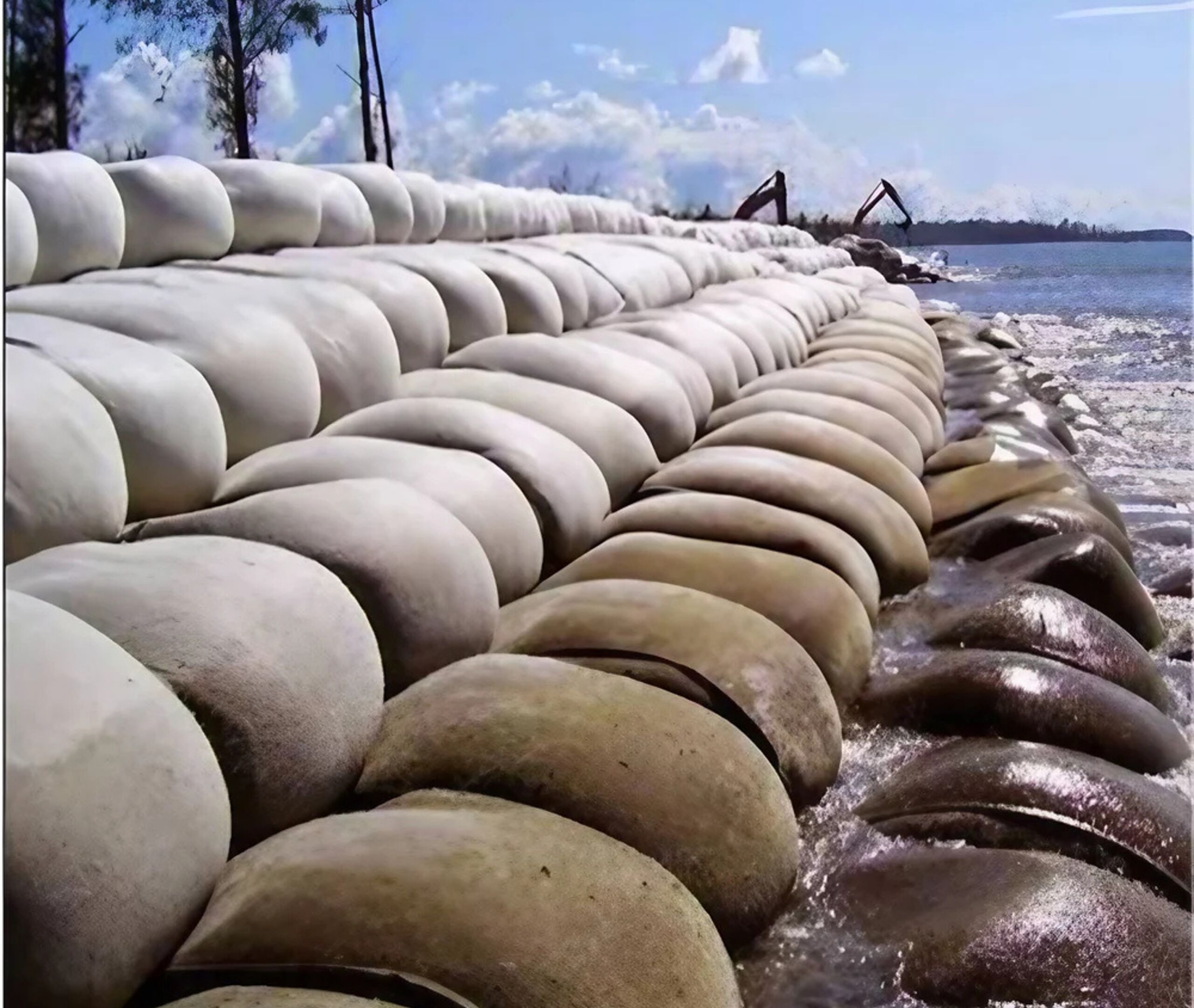
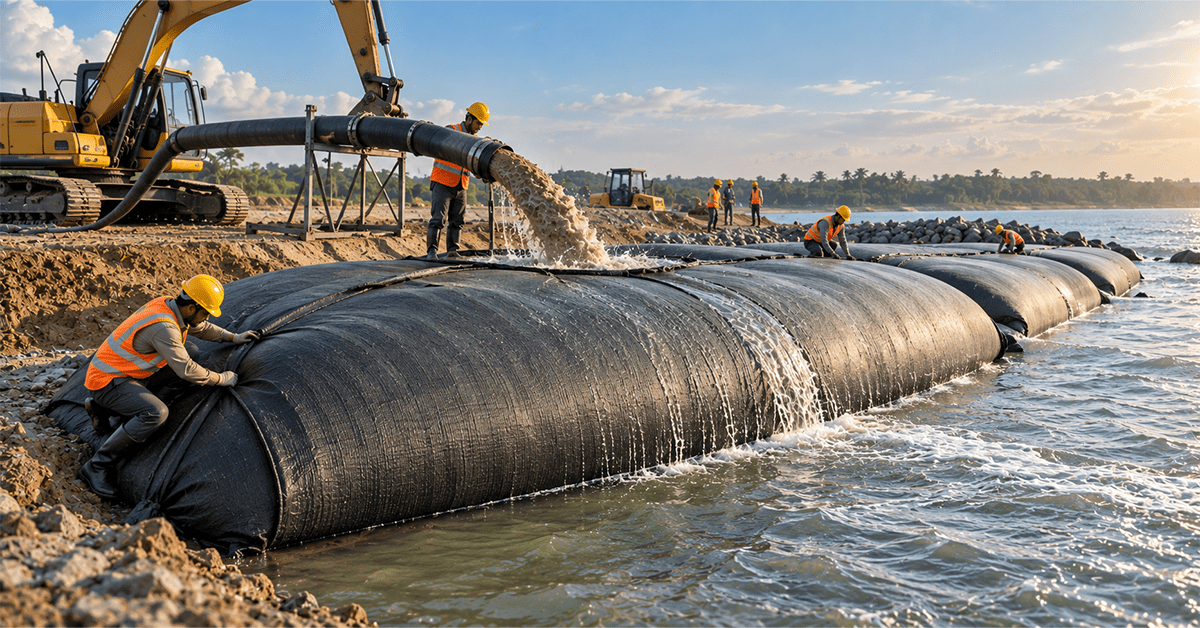
There exist many cases where the use of geotubes has been employed to safeguard riverbanks, shorelines, canal banks, and other hydraulic structures against the effects of erosion. The construction of geotubes involves the use of geotextile fabric and locally available materials such as sand or soil filled into large sacks. The ability of geotubes to be permeable allows water to pass through while trapping the fill.
Supreme Geotech specialises in geosynthetic products which can be employed in erosion control, river bank protection, coastal protection, and flood control. Our geotube and geobag products are developed by using high-quality geotextile fabrics that can form protective barriers. For contractors, it is important to know about the geotube installation process.
What Are Geotubes?
Geotubes are huge geotextile bags which are capable of carrying loads like sand or soil. After positioning them in the desired location, they will act as barriers for reducing effects from the movement of water, thus preventing soil erosion.
According to us, geotubes can be applied in areas like riverbank protection, embankment protection, flood control, canal embankments, land reclamations and hydraulic structures.
Geotube Installation Steps for Contractors
Proper installation planning can enable contractors to avoid unnecessary movement, damages, and settling. The precise layout should always be guided by the design specifications of the project.
1. Assess and Prepare the Site
The first step involves assessing the area to be filled with the geotube. The state of the soil, the water flow direction, and erosion should be assessed, in addition to space for work. The working area must be cleaned of any debris, sharp, and loose items. It should be level and firm. Step two is crucial in order to avoid surface problems that may affect the installation process of the geotextile materials.
2. Place the Geotube
The empty Geotube is put in place as per the design of the project. The bag needs to be put in place without twisting or folding.
Where wind can blow away the geotextile fabric, contractors must make sure that the fabric is fixed in place by using ballast bags or anchors.
3. Prepare the Filling Material
The material that can be used to fill the geotubes can vary depending on the requirements of the project and the suitability of the material for the intended purpose.
There is a high dependency on the availability of local material for filling purposes for the solutions provided by us for the geotubes.
4. Fill the Geotube Evenly
The contractor will need to be vigilant throughout the filling process to ensure that the geotube maintains a consistent form and doesn’t deform too much at any particular point.
The objective is to construct a sturdy barrier but ensure that the geotextile liner is able to serve its purpose as well.
5. Allow Water to Drain
The significant features of geotextiles that are incorporated in geotubes include the ability to be permeable. In the process of filling, the water will drain from the geotextile, while the solid materials will remain inside.
This allows reducing the pressure of the water. For us, this is one of the significant features of its geotubes for hydraulic purposes.
6. Check the Installed Structure
Once the process of filling and installation is done, inspecting the geotube is very crucial. Inspecting the geotube for water flow and erosion in the surrounding areas is also vital for contractors. This becomes even more critical during and after heavy rainfall.
Geotube Installation Methods and Site Conditions
There is no one method for installing Geotube that works in every scenario. The contractor must take into account the area, the soil, the flow of water, the degree of erosion, and the reason for the installation.
In the case of riverbanks or embankments, the geotube will serve as an outer layer of protection from water flow. Along the coast, it will be used for the shoreline’s protection. In flood prevention, geotube installations can help secure vulnerable areas.
The weather needs to be considered during the process of installation as well. Strong winds can move the geotextile materials, and rain can soften the ground, making preparation difficult. We advise checking the weather and ground conditions before the installation and examining the material before covering.
Why Choose Supreme Geotech for Geotube Solutions?
We make geosynthetics that are used in difficult construction projects and for hydraulic purposes. We have our own production plant close to Kolkata, West Bengal, which has state-of-the-art production and testing facilities. The types of products that it offers include non-woven geotextiles, geotubes, and geobags, which are used for erosion prevention, draining, and protecting riverbanks and other similar functions.
We also make geosynthetics for riverbanks, coastlines, canals, floods, and land reclamation.
Conclusion
The successful geotube installation process requires careful planning even prior to bringing the geotube to the site. It is important to evaluate the ground, to prepare the area for installation, to position the geotube properly, to use the appropriate fill and to monitor the geotube during and after the filling.
We offer geotube and geobag products that will be helpful in tasks such as erosion prevention, bank stabilisation, flooding control, and other hydraulic-related tasks. When properly installed, these geotextile products can help prevent the damage from moving soil and water.
What is a Geotube?
It is a big fabric bag that is filled with sand, soil or other suitable materials and used for various purposes, such as flood control and erosion control.
Why is water drainage important in Geotube installation?
The fabric of the Geotube will let water drain out but will keep the filling material in place. It reduces the pressure of the water inside the filled tube.
Where are geotubes applied?
Geotubes can be installed for riverbank protection, coastal protection, shoreline stabilisation, flood control, canal embankments, land reclamation and construction of hydraulic structures.
Geotextile Manufacturing Process in India: From Raw Fiber to Finished Fabric
Geotextile Manufacturing Process in India: From Raw Fiber to Finished Fabric
Geotextiles have emerged as an integral part of contemporary infrastructural construction projects with uses in road building, drainage, railways, landfills, erosion, and riverbank protection, among other applications. However, what is the process involved in the production of this fabric from synthetic fibres into a finished product for use in projects? Knowledge about the geotextile manufacturing process can help the infrastructure firm to make informed choices while choosing a geotextile manufacturer.
Supreme Geotech is a producer of nonwoven technical fabrics located in Eastern India. We produce nonwoven geotextiles made out of polypropylene and polyester staple fibres under our SuperGeo brand name. Our geotextile manufacturing plant of Supreme Geotech near Kolkata in the state of West Bengal uses automated needle punching machines and in-house testing laboratory facilities.
What Is the Geotextile Manufacturing Process?
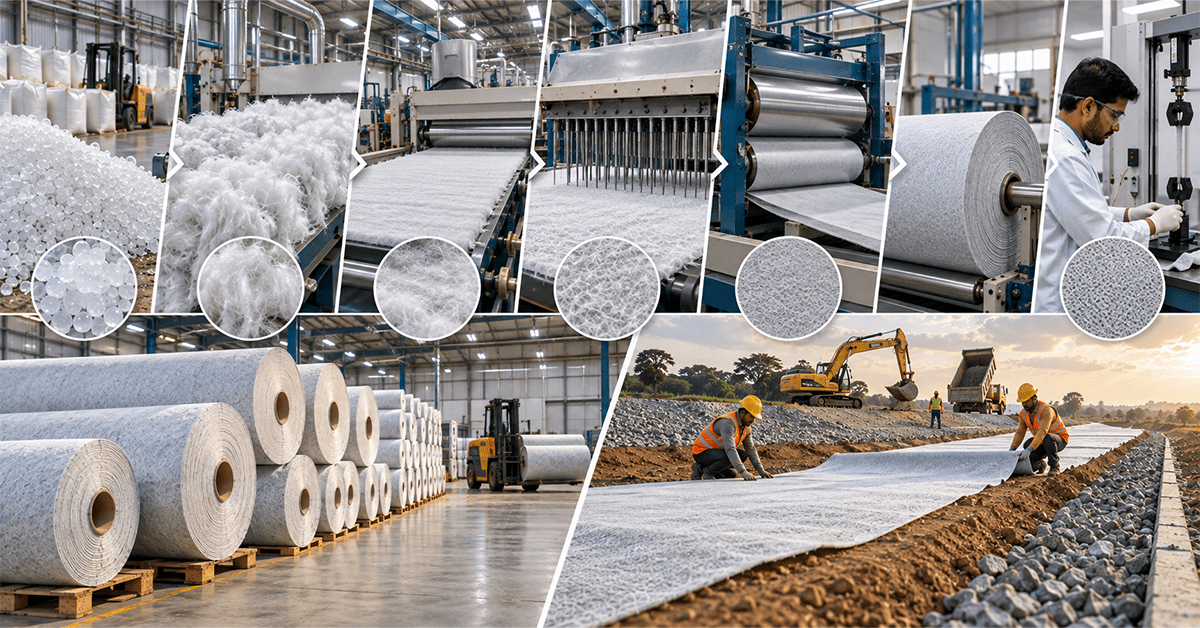
Fabric production through the geotextile fabric manufacturing process is carried out through various controlled steps. They are important because they make sure that the cloth made is strong, flexible and easy to handle. down below is the geotextile manufacturing process:
1. Choosing of the Raw Fibres
This first step involves the choice of raw materials which will be used in making the Geotextile fabric. In Supreme Geotech’s case, either the polypropylene or polyester fibres are chosen as raw materials for use in the fabric.
2. Fibre Processing
After selecting the appropriate fibres, their processing follows in order to make them ready for use in the subsequent steps in fabric production.
3. Formation of Fiber Web
Then the process moves onto the formation of fibres into a web, which acts as a base for the making of non-woven fabrics.
4. Needle Punching
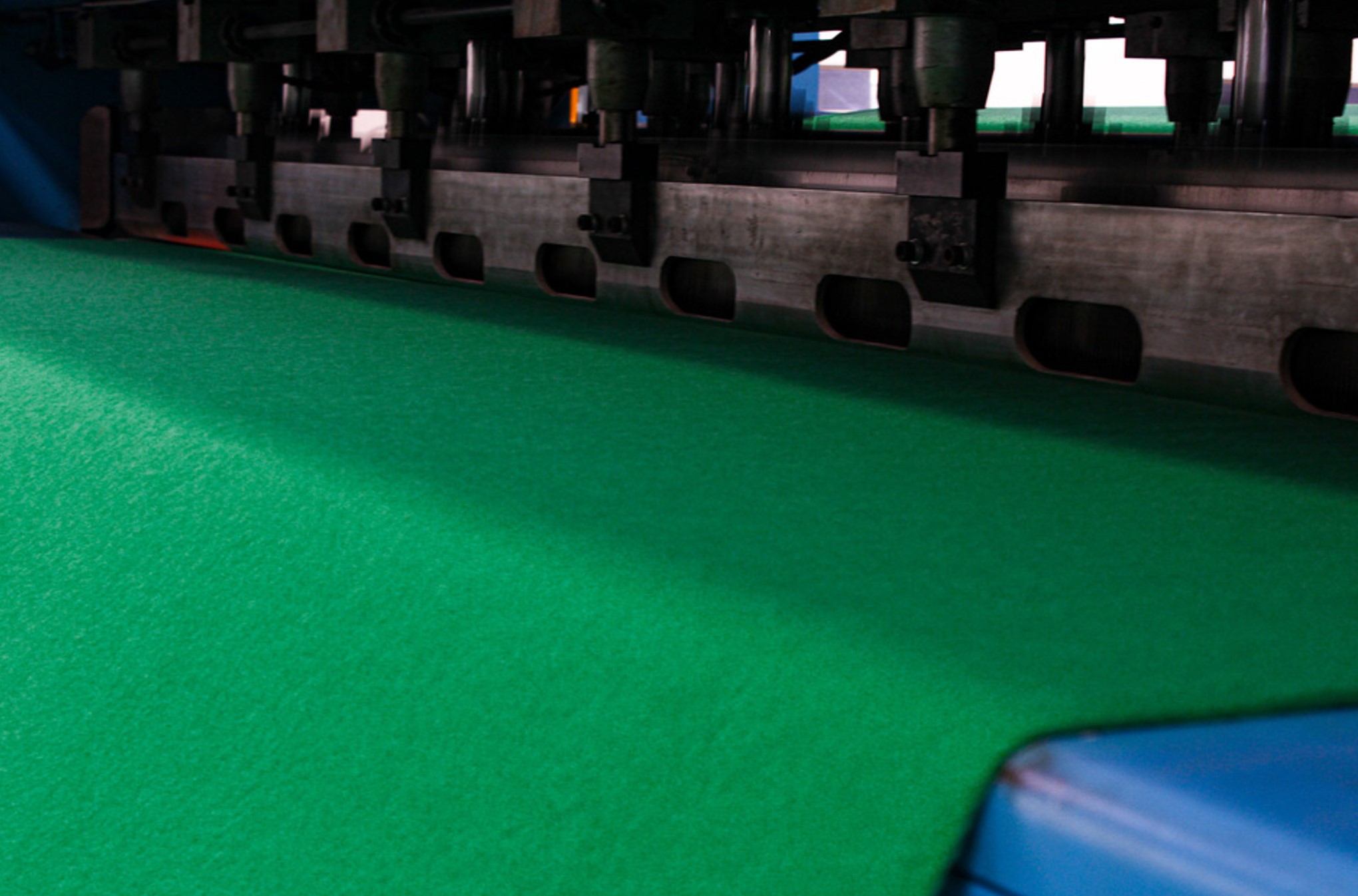
Needle punching is a very significant step involved in how geotextiles are manufactured at Supreme Geotech. Special needles are used repeatedly to punch through the fibre mat and entangle the fibres to create a stable structure of fabric. In the end, this process results in a durable and flexible as well as highly permeable nonwoven geotextile fabric.
5. Online Calendaring
Another process Supreme Geotech adopts to give its products a durable finish is that of online calendaring. It helps to achieve the necessary qualities of the fabric that will be produced.
6. Testing and Quality Control
Prior to delivery, the geotextile products of Supreme Geotech undergo rigorous testing in the company’s in-house laboratory. It is a manufacturer of products that meet the required ASTM and DIN as well as other infrastructure specifications.
7. Slitting, Customisation and Delivery
Post manufacturing and testing, the fabric can be delivered in different widths as per project requirements. At Supreme Geotech, our geotextiles are manufactured in fabric widths of up to 5 metres, and the company also manufactures uniformly slitted smaller rolls of fabric for specific purposes.
Applications of Finished Geotextiles
The final SuperGeo geotextiles made of nonwoven material find application in various types of infrastructural construction. Some examples are pavements, unpaved roads, railway ballasts, French drains, edge drains, landfills, tunnels, parking lots, containment ponds and erosion control. It performs the task of separation, filtration, drainage and stabilisation of soils.
Why Choose Supreme Geotech?
A consistent process for manufacturing geotextiles is crucial when the performance of the fabric becomes important at the site. We at Supreme Geotech, through automation in manufacturing machines, control in the manufacturing process, and tests conducted internally, ensure consistency in the quality of its products. The manufacturing plant of the company located close to Kolkata has good road, rail, and sea linkages.
Conclusion
Each of these steps has its own contribution towards making the product. We at Supreme Geotech have a well-controlled process of manufacturing non-woven geotextile fabric, which is done through its geotextile manufacturing process. SuperGeo is one of the offerings of Supreme Geotech for geotextile fabric solutions for infrastructure projects that require soil separation, filtration, drainage and stabilisation.
What types of fibres are used for making nonwoven geotextiles?
Nonwoven geotextiles can be made from polypropylene or polyester staple fibres.
What is the process of needle punching in geotextile production?
The process of needle punching mechanically interlocks fibres in a web to create nonwoven fabrics.
In what widths are nonwoven geotextiles offered?
Nonwoven geotextiles can be offered in widths up to 5 metres and others of smaller sizes depending on project requirements.
Where are nonwoven geotextiles usually applied?
They are applied in roads, railroads, drainage applications, landfills, tunnels, car parks, rivers and coasts, and other infrastructural applications.
Woven vs. Non-Woven Geotextile: Which One Do You Need?
Woven vs. Non-Woven Geotextile: Which One Do You Need?
There are many civil engineering projects that could be benefited by geotextiles because geotextiles aid in separating soil, filtration, drainage, reinforcement, and protection from erosion. It is not necessary that all types of projects need the same fabric. Knowing about the distinction between woven and non-woven geotextiles will allow engineers and contractors to choose the right material according to the nature of the ground and their requirements.
We at Supreme Geotech produce high-grade non-woven geotextile fabric which can be employed in different kinds of infrastructure projects. The non-woven geotextile fabric is produced using the process of needle-punching, wherein polypropylene and polyester staple fibres are used to manufacture the product. We, a geotextile manufacturer in India, provide geotextiles for roads, railroads, drainage, landfills, tunnels, ports, riverbanks, and coastal regions.
What Are the Types of Geotextile Fabric?
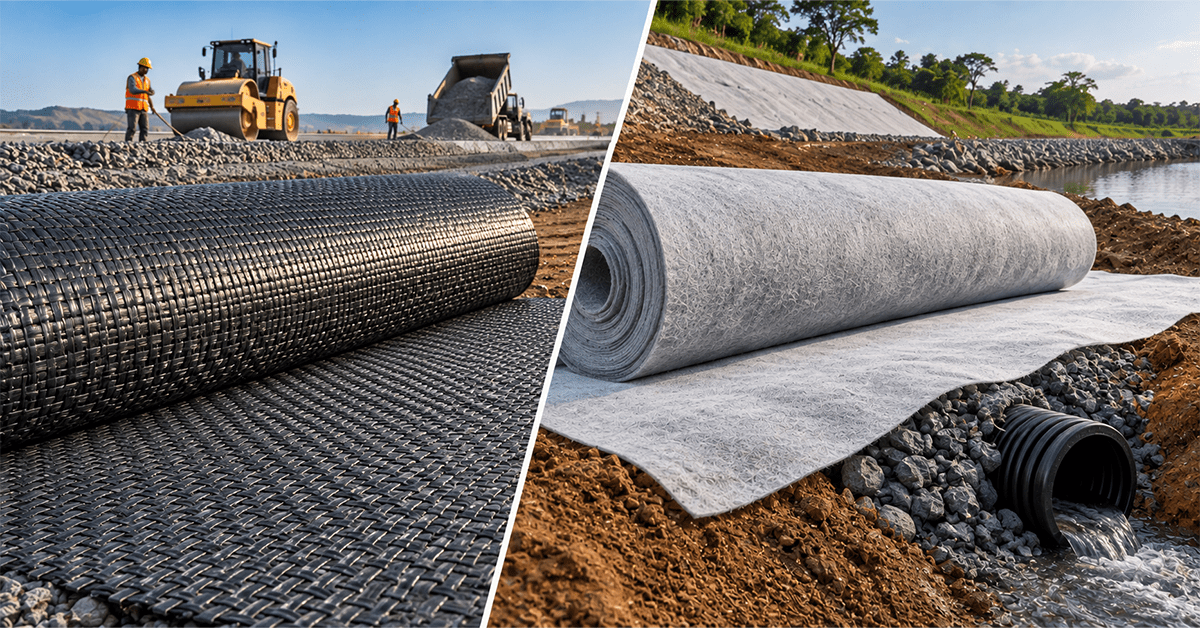
In general, there are two types of geotextile fabrics that are readily available. These include woven geotextiles and non-woven geotextiles. While both types play a vital role, there is a difference between them. Woven geotextiles are manufactured through weaving of threads following a specific pattern. As a result, it possesses a textured surface along with good tensile strength.
Nonwoven geotextiles are formed by bonding fibres. We manufacture nonwoven geotextiles via the process of needle punching.
Woven vs Non-Woven Geotextile
Woven Geotextiles
Generally, woven geotextiles have high tensile strength and can be used in places where the fabric must withstand considerable stress. Engineers can use them for purposes where soil reinforcement, load transfer, and ground stabilisation are required.
Their structure is highly structured and hence makes them suitable for such applications.
Non-Woven Geotextiles
The non-woven geotextile consists of a more flexible fibre-based composition. High permeability is its characteristic, which makes nonwovens a good choice when water must penetrate the fabric and soil particles stay within it.
Nonwoven geotextiles from us can be applied for filtration, drainage, separation, soil stabilisation and erosion control projects. The range of use of these geotextiles includes roads, railway embankments, French drains, landfills, tunnel linings, parking and river or coastal embankment protection.
Woven and Non-Woven Geotextile Uses
The type of fabric needed for any geotextile will be determined by what the project requires from it.
Examples of Woven and non-woven geotextile uses include:
| Requirement | Suitable Geotextile |
|---|---|
| High tensile strength | Woven |
| Soil reinforcement | Woven |
| Load distribution | Woven |
| Filtration | Non-woven |
| Drainage | Non-woven |
| Soil separation | Non-woven |
| Erosion control | Non-woven |
But engineers have to ensure that this is done after checking the technical specifications.
Why Non-Woven Geotextiles Matter
In many construction projects, there is a requirement of movement of water along with soil retention. In this situation, nonwoven geotextile materials are preferred.
In Supreme Geotech, nonwoven fabrics enable passage of water without retaining the soil particles. Hence, this product is ideal for filtration and drainage works which require movement of water along with soil retention.
Various types of geotextile fabrics are made available in varying width specifications. At Supreme Geotech, quality testing is done in its own laboratory.
Choosing the Right Geotextile
Selection of either woven or non-woven material must be made based on the intended purpose of the project and not just the material.
Factors to consider:
1.Strength needed
2.Soil conditions
3.Flow of water
4.Filtration capability
5.Drainage needs
6.Loading expected
7.Exposure to the environment
8.Installation conditions
At Supreme Geotech, our main goal is to produce geotextiles that suit the requirements of civil engineering projects.
Why Choose Supreme Geotech?
Supreme Geotech is engaged in the manufacture of geotextiles from polypropylene and polyester fibres at our manufacturing plant, which is fitted with automated needle punching machines along with our own testing laboratories.
Supreme Geotech offers geotextiles for use in construction for various purposes like soil stabilisation, drainage, and erosion control of riverbeds and coastal areas.
Conclusion
It is very vital to have knowledge about woven vs non-woven geotextile when choosing materials for your infrastructure construction project. It should be noted that woven geotextiles are best suited to use in those situations where there is a need for strength and reinforcement. On the other hand, non-woven geotextiles are useful for filtration, drainage, separation, and erosion protection.
Supreme Geotech provides various types of nonwoven geotextile fabrics for the purpose of providing feasible solutions for difficult civil engineering projects.
What is the main difference between woven and non-woven geotextiles?
In woven geotextiles, there is interlocking of yarns and hence higher tensile strength, whereas in non-woven geotextiles, there is bonding of fibres that provides flexibility and permeability.
What are the common kinds of geotextile fabrics?
There are mainly two types, which include woven and non-woven geotextiles, depending on the technical needs of the project.
How can one choose between woven and non-woven geotextiles?
Strength, soil, drainage requirements, loading and the application of the fabric must all be taken into account.
How Weather Affects Geotextile Installation
How Weather Affects Geotextile Installation
The modern-day construction industry uses geotextile fabrics for several applications such as soil stabilisation, filtration, drainage, separation, and erosion control. However, the effectiveness of geotextile fabrics depends not only on the fabric but also on the method of installation. The weather affects geotextile installation, which may also have an effect on installation.
We use needle-punched geotextile fabrics, which offer good structural strength and flexibility and are highly permeable. The geotextile fabrics we produce find application in roads, highways, railways, landfills, drainage systems, tunnels, ports, and erosion control projects.
Why Weather Matters During Installation
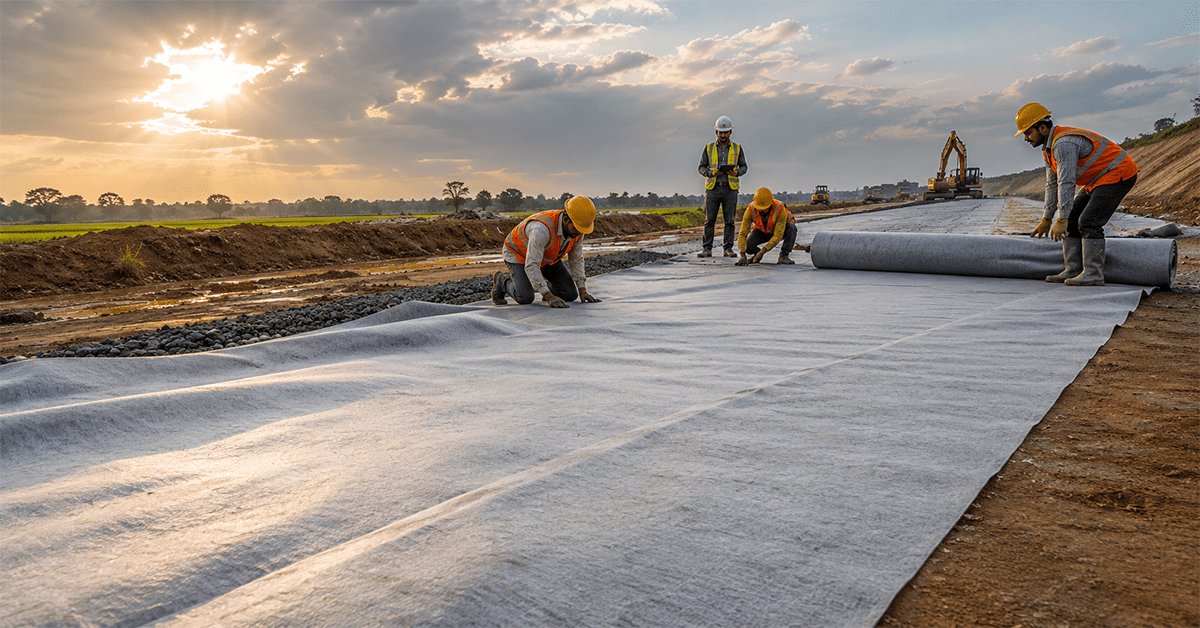
The geotextile fabric is normally placed over prepared soil before the layer of soil or any other building material is placed over the fabric. In this phase, the fabric is open to elements like the wind, water, sun, or moist soil.
Since the engineers will not be able to check or change the fabric after it has been covered, the installation of the fabric has to be done properly.
How Different Weather Affects Geotextile Installation
1. Strong Winds Can Move the Fabric
Wind is one of the first obstacles encountered when installing geotextiles. The lightweight fabric may be moved, folded, or lifted prior to the installation of the cover material.
Installation crews are advised to have enough ballast bags or anchors available to prevent movement. Exposed areas need to be secured, and large pieces of fabric left exposed are discouraged.
Proper installation and handling will help preserve the fabric quality during installation according to Supreme Geotech.
2. Rain Can Affect Site Preparation
Rain makes the soil under it soft, uneven, or hard to work on. In case engineers put geotextile fabric on the surface which is not good enough, the sharp stones and any kind of debris can cause damage to the geotextile fabric.
It is necessary that before installing geotextile fabric, the ground should be cleaned up and made even. It decreases the chance of being pierced by something.
This matter becomes even more relevant when we talk about construction of roads, railways, and drainage systems.
3. Wet Soil Can Affect Placement
When the ground is too wet, it becomes hard for the construction team to adequately prepare the ground. Large pieces of equipment may form grooves in wet subgrades.
It is important for project managers to assess the state of the ground prior to laying the fabric. Project managers must try to prevent excess construction traffic from traversing the fabric.
4. Extreme Heat Requires Careful Handling
The high temperature could affect the ease at which the job on site is done and the way the fabric will be handled and positioned.
It is important to follow the instructions for handling and installation as provided by the manufacturer to ensure that the geotextile quality is maintained.
Weather and Different Geotextile Applications
The importance of weather becomes significant in such projects where the fabric will be exposed during the process of installation. The supreme geotechnical nonwoven geotextiles are used in the construction of roads and highways, railroad beds, French drains, landfills, tunnel linings, parking areas, and riverbed and shoreline stabilisation.
In case of drainage, the fabric will have to be installed in such a way that it allows the water to flow through but holds the soil particles. In the case of railways and roads, proper installation ensures that the geotextile can perform its function of separation and stabilisation.
Preparing for Weather Before Installation
A few precautions will go a long way to make the process much easier:
1.Observe the weather conditions before starting the installation process.
2.Ensure that the area to be covered is ready and level.
3.Have ballast bags or anchors handy during windy weather conditions.
4.Do not use any machinery in close proximity to the fabric being installed.
5.Have an extra repair kit containing extra geotextile fabric and appropriate tape.
6.Ensure that the fabric is inspected before it is covered.
7.Cover the fabric once all the inspection requirements have been met.
Why Choose Supreme Geotech?
Our products undergo testing within our own lab prior to shipment and are supplied in varying sizes based on client needs. We manufacture products which conform to ASTM standards, DIN standards, and many more infrastructure specifications, including MORTH & RDSO.
As a geotextile manufacturer in India, Supreme Geotech is committed to providing reliable products.
Conclusion
The weather can play a direct role in how easy and efficient the process of installing geotextile material will be. Wind can carry the material, and rain can impact the preparation of the site. Proper planning, site preparation, positioning, and covering will mitigate some of these issues.
Learning about the weather affects geotextile installation and will allow for more effective planning of work and protection of the material prior to its installation as part of the finished project. When using high-quality geotextiles by Supreme Geotech and employing proper installation methods, projects will be able to have an advantage of better drainage and stability.
How does the weather affect geotextile fabric installation?
The weather, including wind, rainfall, wet surface, and very hot temperature, may affect fabric installation.
In what way can engineers protect geotextile fabric from movement in windy conditions?
Engineering teams may use ballast bags and appropriate anchors for the stabilisation of fabric segments until the covering material is installed.
Is it possible to install geotextile fabric when the soil is moist?
The answer depends on the specifics of the project. Extremely wet and unstable soil makes proper surface preparation very difficult.
Application of Geotextiles in Dam Construction
Application of Geotextiles in Dam Construction
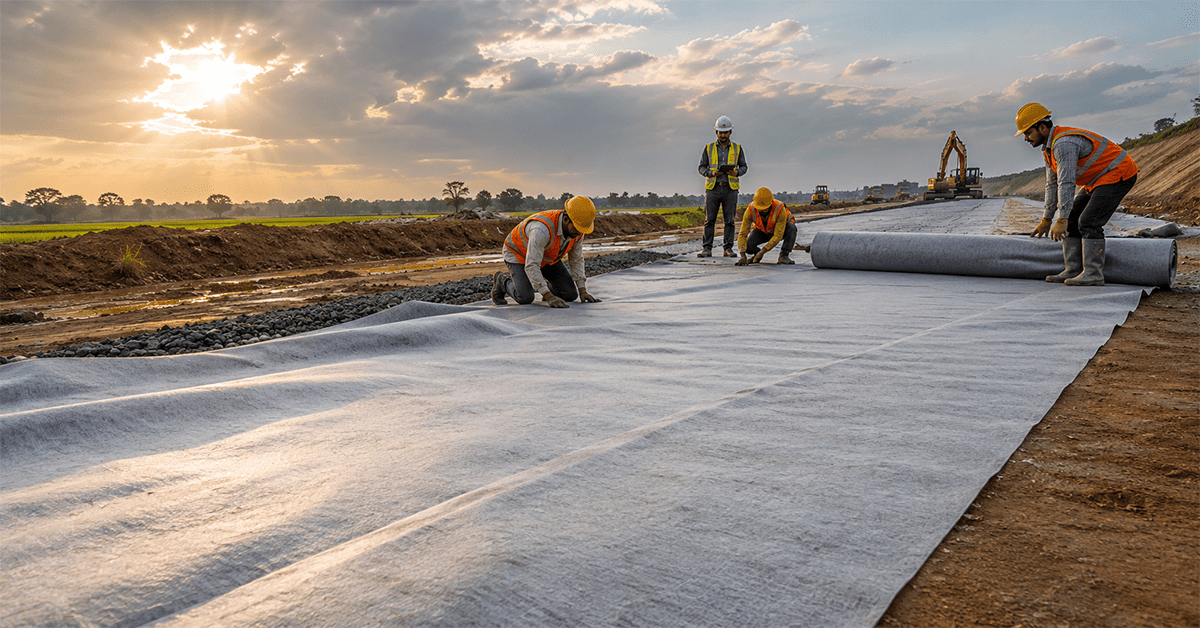
Proper planning of soil, water, drainage, and erosion management is necessary for dam construction. The ground condition around the dam is very significant for its performance in the long run. Geotextiles can help in meeting such requirements through the separation of soil, movement of water through the ground, and prevention of soil erosion.
Our company, Supreme Geotech, provides quality nonwoven geotextiles through the brand name of SuperGeo. Our geotextiles are formed from polypropylene or polyester fibres using the process of needle-punching that results in a highly permeable structure of the material. As the geotextile manufacturer in India, Supreme Geotech offers geotextile solutions for roads, railroads, drainage, riverbeds, coastal areas, landfills, tunnels, ports, and other infrastructure projects.
Why Geotextiles Matter in Dam Construction
Dams and their environs are still subjected to the movement of water over a long period of time. Thus, soil stability, drainage, and soil erosion become essential issues in the construction process.
The application of geotextiles is one way that can assist with such concerns through the creation of an open layer between the soil and other materials of construction. Water can pass through it, but the soil particles will stay where they belong.
Key Application of Geotextiles
1. Soil Separation and Stabilization
The different layers of soils and aggregates should not mix with one another because this will not allow the formation of the proper foundation structure. Geotextiles can serve as the separator layer that will prevent the mixing of fine soils with aggregates.
Supreme Geotech is a company that produces non-woven geotextiles used in soil stabilisation and infrastructural developments.
2. Filtration and Drainage
The movement of water through soil may transport soil particles and cause instability of the ground. The geotextile by Supreme Geotech is highly permeable and permits water movement without losing soil particles.
Filtration is one of the functions that can be used in drainage systems for infrastructure protection. Moreover, the geotextiles are applied in French drains, edge drains, and subsurface drainage systems.
3. Erosion Control
Water has the capacity to slowly erode exposed soil from riverbanks, slopes, and other places near water infrastructure. Geotextiles could play a role in this process in that they facilitate soil retention and erosion prevention.
Supreme Geotech is a company that offers geotextile products to protect riverbeds and coastal zones from soil erosion. In addition, its geobags can be filled with sand to protect hydraulic infrastructures and riverbanks from extreme soil erosion.
4. Drainage Around Supporting Infrastructure
Drainage is a vital factor in those regions that are associated with the construction of dams, such as the access roads. Proper selection of geotextiles can facilitate water flow in the soil while inhibiting soil flow.
This will be instrumental in achieving proper soil stability.
Choosing the Right Geotextile
Application of geotextiles must always be based on site conditions and engineering requirements of the project. The soil type, flow of water, the need for drainage, loads, and the function of the material must all be taken into account.
Supreme Geotech manufactures nonwoven geotextiles in widths of up to 5 metres.
Why Choose Supreme Geotech?
Supreme Geotech, being a geotextile producer in india, has a production unit close to Kolkata, West Bengal, with needle-punching machines. It has its own testing facilities and production capabilities to cater to projects throughout India.
The range of SuperGeo includes uses such as soil stabilisation, filtration, drainage, riverbed and coastal protection, road construction, railway, landfill sites, tunnels, ports, and many more.
Conclusion
Geotextiles for use in the construction of dams might prove useful in meeting critical requirements like soil separation, filtration, drainage, and erosion control via proper management of water and soil flows, which helps in creating a suitable ground condition for construction work.
Supreme Geotech’s wide variety of geotextile and geosynthetics products are designed to suit tough civil engineering works. Choosing the right product and installing it properly remains essential for its efficient working.
Is it possible for geotextiles to control erosion around dams?
Yes. The appropriate geotextiles can be used in erosion control in the regions that are affected by the water movements.
What kind of geotextile is suitable for filtration purposes?
The nonwoven geotextiles are widely applied in filtration due to the properties they have.
What is the factor to be considered before choosing geotextiles?
The engineers need to consider several factors before choosing geotextiles, including soil conditions, drainage, water movement, loading, and environment.
Geotextile Manufacturing Process in India: From Raw Fiber to Finished Fabric
Geotextile Manufacturing Process in India: From Raw Fiber to Finished Fabric
The use of geotextiles in civil engineering is quite important, for these fabrics allow soil, water, and drainage control in different building processes. Supreme Geotech produces a variety of nonwoven geotextile fabrics that can be used in soil stabilisation, filtration, drainage, separation, and erosion control applications. Being an experienced geotextile manufacturer in India, Supreme Geotech delivers geotextiles for road and railway constructions, landfills, drainage and pipeline installations, tunnels, and coast protection.
Although the range of products offered by Supreme Geotech includes nonwoven geotextiles only, getting familiar with knitted geotextiles allows differentiating between the structures of geotextiles.
What Are Knitted Geotextiles?
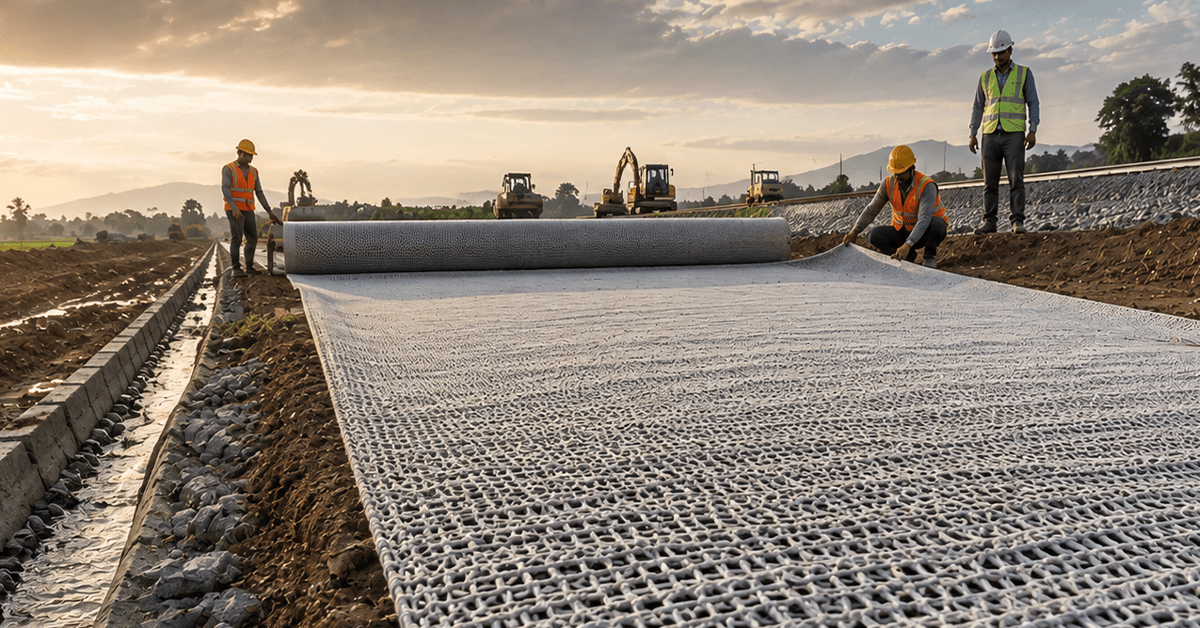
Knitted geotextiles are constructed using yarns that are interlocked through loops. The construction method for knitted geotextiles is different from Woven Geotextiles since woven geotextiles involve the intertwining of yarns in a regular pattern.
Through the interlocking of yarns in loops, knitted geotextiles are flexible and able to accommodate any change in the surface where they are laid.
Depending on the yarn used, knitting pattern and process of manufacture, knitted geotextiles may have different properties. The selection of the geotextile material will always depend on the purpose.
Key Features of Knitted Geotextiles
1. Flexible Structure
The looped construction allows the knit geotextile to be elastic. This enables the material to adapt to any uneven surface and also some ground movement.
Such an attribute is useful when elasticity is required, rather than rigidity.
2. Controlled Water Movement
Knitted geotextiles can create conduits for water flow depending on how they have been made. It is still necessary to manage water flows appropriately in civil engineering since water can cause the degradation of soils.
Where a project requires water filtration or drainage, it is appropriate for engineers to assess the fabric’s permeability against the project specifications.
3. Lightweight Handling
Knitted fabric may be fairly easy to install, as its flexibility will aid in managing the fabric over difficult surfaces.
But in any case, the installation team needs to follow the guidelines for handling provided by the manufacturer.
4. Adaptability
This flexibility of the knit structure makes it possible to adjust to some extent with the changes that might take place in the ground beneath. Thus, it can be used in those areas where the fabric is required to conform to the surface of the ground.
Uses of Knitted Geotextiles
Knitted geotextile fabric suitability is dependent on the particular characteristics that the material holds. These materials can be considered for use where flexibility, flow of water, or adaptability to the surface is desired.
They can be evaluated for:
1.Applications involving drainage
2.Protection of soil
3.Prevention of erosion
4.Ground separation
5.Surface stabilization
Such material can be chosen after careful consideration of soil conditions and other considerations.
How They Compare With Nonwoven Geotextiles
The production technique has an impact on the performance of the geotextile. The manufacture of non-woven geotextile by us is done using the needle-punching technique with polypropylene and polyester fibres.
Thus, the contractor should not choose geotextile depending on its structure alone. First, one must ascertain the requirements of the project and then choose between materials based on their specifications.
Supreme Geotech’s Approach to Geotextile Solutions
Supreme Geotech is the producer of non-woven geotextile fabric used for numerous infrastructural purposes. These are used for roads and highways, railroad tracks, French drains, landfill liners, tunnel linings, parking facilities, and protection of riverbed and coastal areas.
As the geotextile fabric producer in India, Supreme Geotech concentrates on the consistent production and quality control of our products.
Conclusion
The knitted geotextiles provide flexibility in fabric design, which can be utilised for applications needing adaptability and controlled flow of water. Nevertheless, the appropriate geotextile choice must always be based on the demands of the project itself and not on the fabric design itself.
In applications that will need non-woven geotextile materials, we provide a variety of materials suitable for filtration, drainage, separation, and soil stabilisation. The knowledge of the differences among the various geotextile designs will assist in proper material selection.
What are knitted geotextiles?
Knitted geotextiles are made up of yarn that is formed into a fabric by being connected together through interconnected loops.
What are the differences between knitted geotextiles and non-woven geotextiles?
The distinction between knitted and non-woven geotextiles is that in the case of knitted geotextiles, loops are used in the manufacturing process, while in the case of non-woven geotextiles, fibre bonding is used.
What are some applications of knitted geotextiles?
Given their physical properties, they can be used in the following constructions: drainage, soil stabilisation, erosion control, separation, and reinforcement.
What are the factors an engineer must consider before employing geotextile in construction?
Some of the factors that should be considered include the properties of soil, strength properties, permeability, loading, environmental exposure, and application.
Are knitted geotextiles suitable for all construction works?
Not really. The types of geotextiles needed for the construction vary according to the type of the construction works.
Geotextiles in Stormwater Management
Geotextiles in Stormwater Management
The management of stormwater is important in ensuring that roads, drainage systems, structures, and the land are not affected. Water that does not seep into the land leads to floods, erosion, and destruction of the subsoil. The geotextiles play an important role in the management of the above issues by acting as filters, drains, soil separators, and erosion control agents.
We, as a geotextile manufacturer in India, specialise in the manufacture of geotextile non-woven fabrics, which are used in different civil engineering constructions. Our geotextiles are made of polypropylene or polyester staple fibres through the needling method. Our geotextiles are flexible and highly permeable. We are among the leading manufacturers of geotextiles in India. Our geotextiles can be used in different infrastructure projects such as drainage, roads, railways, landfills, pipelines, tunnels, riverbanks and more.
What Are Geotextiles?
Geotextiles refer to man-made fabrics that are used with soil and other construction materials to increase the effectiveness of engineering structures.
They are made in such a way that their characteristics allow them to control the movements of soils and water.
Geotextiles in stormwater management are beneficial since they will act as filters as well as prevent soil particles from getting into drainage layers.
Non-woven geotextiles made by Supreme Geotech use polypropylene and polyester staple fibres.
This high permeability characteristic helps in allowing water to pass through and retain soil particles.
How Geotextiles Support Stormwater Management
1. Improving Drainage
One of the several benefits of the use of geotextiles in stormwater management includes the fact that geotextiles can help to make the transportation of water possible effectively.
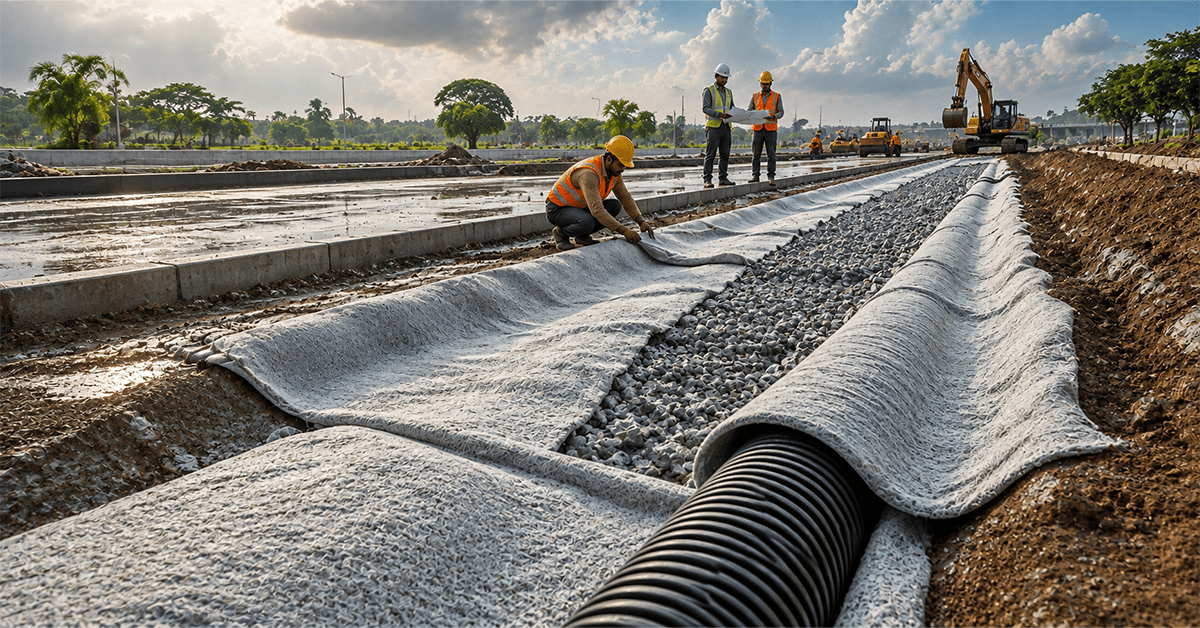
By incorporating geotextiles into the drainage system, one will be able to facilitate the passage of excess water without affecting the soil around the drainage system. Supreme Geotech offers geotextiles for use in French drains, edge drains, and sub-surface drainage systems.
2. Supporting Filtration
The movement of stormwater through soil may involve the transport of small particles. These particles when deposited in the drainage layer may affect its efficiency.
Nonwoven geotextile fabrics act as the filter material between the soil and the drainage. The fabric ensures that the water passes through it, but not the soil particles.
3. Reducing Soil Erosion
High amounts of rainfall coupled with water flow can lead to erosion of soil in slopes, riverbanks, and other similar areas.
The geotextile products offered by Supreme Geotech can help in soil retention and the protection of vulnerable surfaces from erosion. In addition to this, the geobags of Supreme Geotech are used for riverbank protection as well.
4. Separating Soil and Drainage Materials
Drainage systems have layers of soil and aggregates or other drainage media. However, if these layers get mixed up, the performance of the drainage system is not likely to be achieved.
The role of geotextile fabrics is to separate different types of material but allow water flow through the fabric.
Applications of Geotextiles in Stormwater Systems
Geotextiles in stormwater management can support several infrastructure applications, including:
1.French drains
2.Edge drains
3.Subsurface drainage
4.Road and highway drainage
5.Railway drainage systems
6.Erosion control
7.Riverbank protection
8.Landfill drainage systems
The correct product should always be selected according to soil conditions, drainage requirements, expected water flow, and project specifications.
Why Choose Supreme Geotech?
Supreme Geotech manufactures non-woven geotextiles used in rigorous civil engineering projects. The geotextiles are available in various widths, thicknesses, and GSMs.
Supreme Geotech is an experienced manufacturer of geotextiles in India that operates a manufacturing plant in proximity to Kolkata in West Bengal with advanced needle punching machines and inbuilt testing facilities. The applications include soil stabilisation and drainage and protection of river beds and coastlines.
Conclusion
Effective stormwater management involves more than simply ensuring an outlet for excess water; the system should ensure that there is no movement of soil, drainage capacity and that erosion is not affecting the surroundings.
Geotextiles in stormwater management could be used in order to provide filtration, drainage, separation and erosion prevention, among others. As a result of having a variety of nonwoven geotextile products, Supreme Geotech offers solutions to water and soil condition problems encountered by engineers and contractors in roads, railways, drainage systems, among others.
Choosing the right geotextile as per the site conditions as well as proper installation will help in ensuring efficient drainage and longevity for the project.
In what way can geotextiles help in stormwater management?
Geotextiles allow water through while holding the soil particles, therefore creating filtration and drainage.
Is there any way that geotextiles can prevent soil erosion from stormwater?
Geotextiles will be able to prevent soil erosion since they hold the soil and protect the surfaces from being eroded by the water movement.
In what drainage system applications are geotextiles applied?
They are used in French drains, edge drains, subsurface drainage systems, roads, railroads, and many other drainage applications.
Why do you think there is a need for filtration in stormwater drainage?
Filtration prevents fine soil particles from entering drainage layers while allowing water movement.
What things need to be considered when selecting geotextiles for stormwater management?
The project team needs to consider soil type, water flow expected, drainage requirements, environmental factors, and application requirements for the fabric.
Geocells in Railway Infrastructure: Improving Subgrade Stability
Geocells in Railway Infrastructure: Improving Subgrade Stability
Modern railway infrastructure requires the construction of a good base in order to ensure proper functioning and performance of the system. With the growth in railway infrastructure, geosynthetic materials are being used more frequently by engineers, which provide better ground stability as well as easy construction of the project. Supreme Geotech Pvt. Ltd. produces geosynthetic material of very high quality, which can help to reinforce the ground and increase the durability of the construction.
We, Supreme Geotech, are one of the leading manufacturers of geotextiles in India. Apart from manufacturing nonwoven geotextile fabric, geocells in railway infrastructure are another product produced by our company, which provides good reinforcement of weak subgrades in railway tracks.
Understanding Geocells
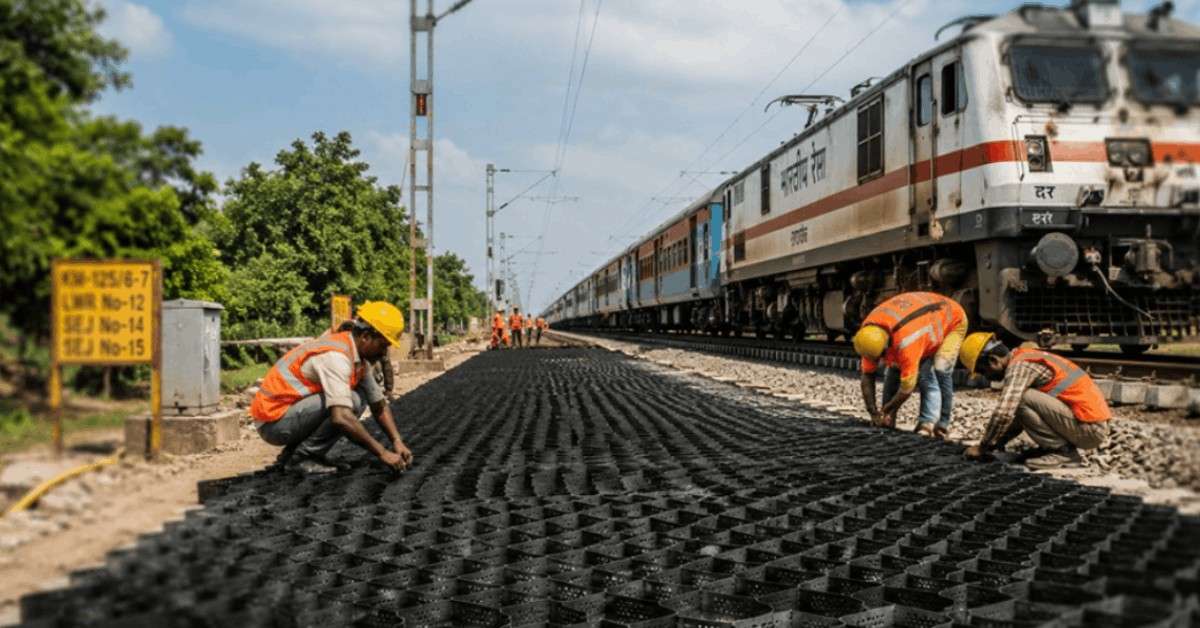
Geocells are three-dimensional systems of cellular confinement structures made up of polymers. Once the geocells are filled with soils, aggregates, or any other material, they provide a stable layer of confinement to distribute loads uniformly on the surface.
On railway construction projects, geocells ensure the stability of the subgrade layer because they restrict the horizontal displacement of the filling material.
Use of geocells and geosynthetics for railway construction provides a more stable railway foundation structure.
Why Subgrade Stability Matters
The subgrade serves as the foundation for all railway tracks. In case the soil beneath is not stable or is soft, then this may result in uneven settlements and ballast movements.
A stable subgrade aids in:
1. Withstanding loads of trains
2. Alignment of the track
3. Minimising deformations
4. Enhancing the overall life of the track
Engineers, by ensuring good conditions of the foundation, can ensure minimum maintenance.
How Geocells Improve Railway Performance
Improved Load Distribution
Among the key benefits of geocells in railway infrastructure is their capability of distributing loads on a larger surface area. By ensuring that the force does not act on a singular point but acts equally distributed on the entire layer, geocells prevent the weakening of the underlying soil.
Limited Soil Movement
Movements of trains cause soil movements underneath the rail tracks in the long run. By ensuring that the infill materials are contained inside the interconnected cells, geocells prevent the lateral movement of the soils.
Drainage Function Improvement
Water buildup under the rails can result in gradual deterioration of the subgrade structure. Although geocells increase the effectiveness of soil confinement, they are frequently used together with nonwoven geotextiles produced by us.
Such use will assist in controlling water flow without causing any soil displacement, thus increasing railway stability.
Reduced Maintenance Needs
Subgrade reinforcement increases the strength of the subgrade and minimises its settlement and deformation, which results in lower maintenance needs.
Therefore, the railway operation becomes more reliable for the infrastructure owner.
Applications in Railway Construction
Uses of geocells in railway infrastructure include:
1. Subgrade Strengthening in Railways
2. Foundation Strengthening for Track
3. Road Access within Railway Project Areas
4. Soft Soil Stabilisation
5. Embankment Strengthening
When combined with geosynthetic solutions for railways, such systems provide engineers the means to construct reliable railway infrastructure that can operate under tough conditions.
Why Choose Supreme Geotech?
We at Supreme Geotech produce geosynthetics used for the construction of current infrastructures. We have developed non-woven geotextile fabric products that are used for the separation, filtration, drainage, and protection purposes of railway, road, landfill, and erosion control projects.
Being a leading geotextile manufacturer in India, our company concentrates its efforts on ensuring product quality and consistent manufacturing in accordance with civil engineering needs.
Conclusion
It is very important for railways to have a good foundation for the safety and efficiency of transport. Geocells in railway infrastructure help improve the strength of weak subgrades, improve loading and minimise the movements of the soil.
If you use geocells in railway infrastructure in combination with other geosynthetics for railway construction, you will achieve a great result in foundation improvement and reduction of maintenance expenses. With the help of high-quality geosynthetic materials, Supreme Geotech will assist you in solving your railway infrastructure issues.
FAQs
In what ways can geocells be applied in designing railway systems?
Geocells increase soil stability, distribute loads and prevent soil movements beneath railway tracks.
What are the benefits of geosynthetics in railway systems?
The application of geosynthetics in railways increases soil stability, maintenance, lifespan and drainage of the railway infrastructures.
Why would you choose Supreme Geotech for railway geosynthetics?
Supreme Geotech manufactures quality geosynthetic products.
Separation, Filtration, Drainage: Understanding the Role of Geotextile Cloth
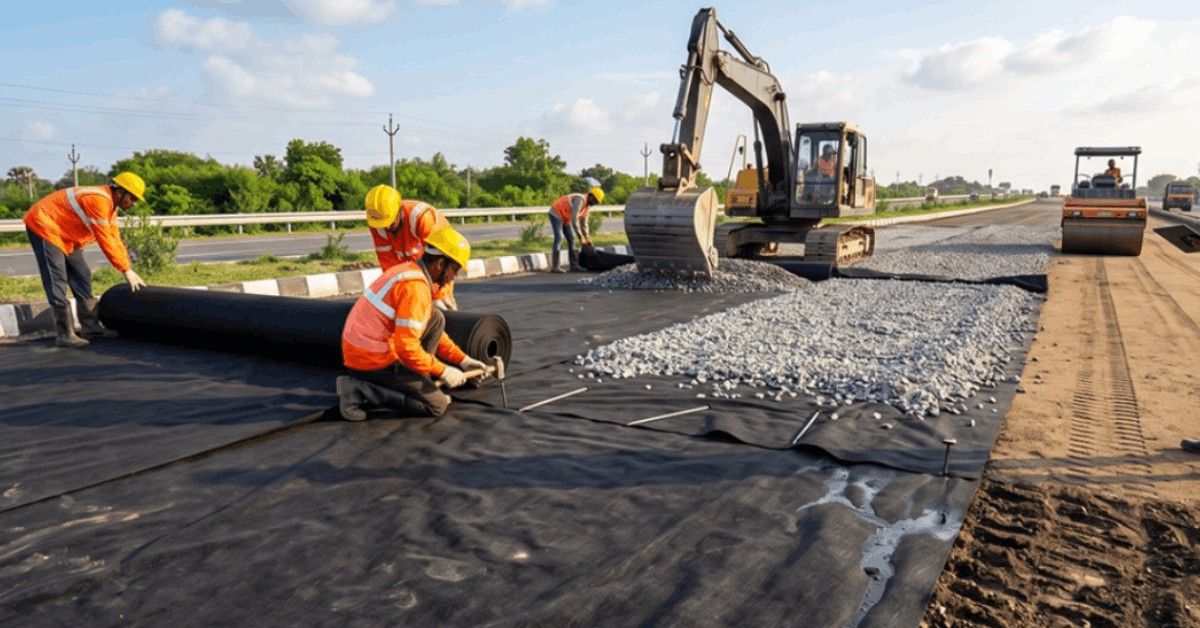
Separation, Filtration, Drainage: Understanding the Role of Geotextile Cloth
Infrastructure works depend not only on the strength of the structural materials used but also on the quality of the soil underlying a roadway, railroad, landfill or drain system. Poor soil conditions and poor water management may lead to issues related to the stability and longevity of a structure or construction. It is in this case that the role of geotextile cloth comes into play.
Supreme Geotech can be your go-to geotextile manufacturer in India, offering high-performance non-woven geotextile fabric for modern-day infrastructure works that will aid in proper soil and water management. We specialize in geotextile cloth for roads, railways, landfills, drains, pipelines, and soil erosion prevention. Our geotextile fabrics ensure stable soil conditions while facilitating water flow.
Understanding the Purpose of Geotextile Cloth
The purpose of geotextile is to enhance the relationship between soil and water without compromising the natural behaviour of the soil. Non-woven geotextiles are manufactured from strong polypropylene and polyester fibres via the needle-punching method. The products of Supreme Geotech offer good strength as well as high permeability.
Separation: Keeping Soil Layers Stable
One of the most important roles of geotextile cloth is separation.
The different layers of soil and aggregates need to be separated to keep their structure intact for better performance. If not separated, there will be mixing of these layers in time, causing weak foundations.
With geotextile cloth placed between the layers of soil, Supreme Geotech ensures the layers are kept separate. This contributes to the overall load distribution and performance of the road, highway, railway track, and other paved areas.
Filtration: Allowing Water to Flow While Retaining Soil
The purpose of geotextile filtration is an important purpose of geotextile. The movement of water through the soil must not involve fine particles because these particles can weaken the structure of the soil around them.
Water filtration is possible due to the non-woven structure of geotextile fabric produced by Supreme Geotech. Thus, filtration facilitates draining and prevents clogging of the drainage system.
Filtration is essential for landfills, retaining structures, pipeline protection, and erosion control projects.
Drainage: Managing Water Efficiently
The process of Geotextile drainage is very important in maintaining the strength of the soil. Water retention will build up pressure in soil layers, thus reducing its load-carrying capacity.
With the help of proper drainage of water, geotextile materials from Supreme Geotech will assist in eliminating surplus water without affecting the soil structure. It ensures better drainage performance in roads, railways, subsurface drainage systems, and landfills.
It also helps in reducing maintenance costs.
Common Geotextile Applications
The geotextile fabric can be applied in various ways, which makes it suitable for use in several kinds of constructions.
Examples of geotextiles provided by Supreme Geotech are:
1. Roads and highways construction
2. Construction of railway tracks
3. Landfill lining
4. Drainage and filtration system construction
5. Pipes wrapping
6. Erosion control
7. Coastal and riverbank protection
8. Tunnel waterproofing
Geotextile fabrics improve the effectiveness of the soils while at the same time providing good drainage.
Why Choose Supreme Geotech?
Geotextile products offered by us include non-woven materials that suit the demands of today’s civil engineering projects. There are a number of widths, GSMs and thicknesses of geotextiles available at Supreme Geotech.
We, Supreme Geotech, are a leading geotextile manufacturer in India, known for quality manufacturing as well as the quality performance of our products.
Conclusion
At Supreme Geotech, we supply geotextile fabric made out of nonwovens for use in modern civil engineering projects. These are available in many sizes and thicknesses, thus catering to varying requirements of the project.
We as a reputed geotextile fabric maker in India ensure high-quality manufacturing and reliable performance of the geotextile products.
FAQs
What is the application of geotextile fabric?
Geotextile can be used to separate, filter, drain, reinforce, and protect various civil engineering structures.
How does geotextile drainage work?
It allows the movement of water but retains the soil particles, hence providing effective drainage without blockages.
Where are geotextiles applied?
Supreme Geotech manufactures quality geosynthetic products.
Why is separation one of the key components of geotextile applications?
This helps prevent the mixing of different soil layers, thereby making sure that there is stability of the foundations.
Why should you consider Supreme Geotech for your geotextile needs?
Supreme Geotech manufactures high-quality non-woven geotextile fabrics that perform well in many civil engineering structures.