Geotextile Manufacturing Process in India: From Raw Fiber to Finished Fabric
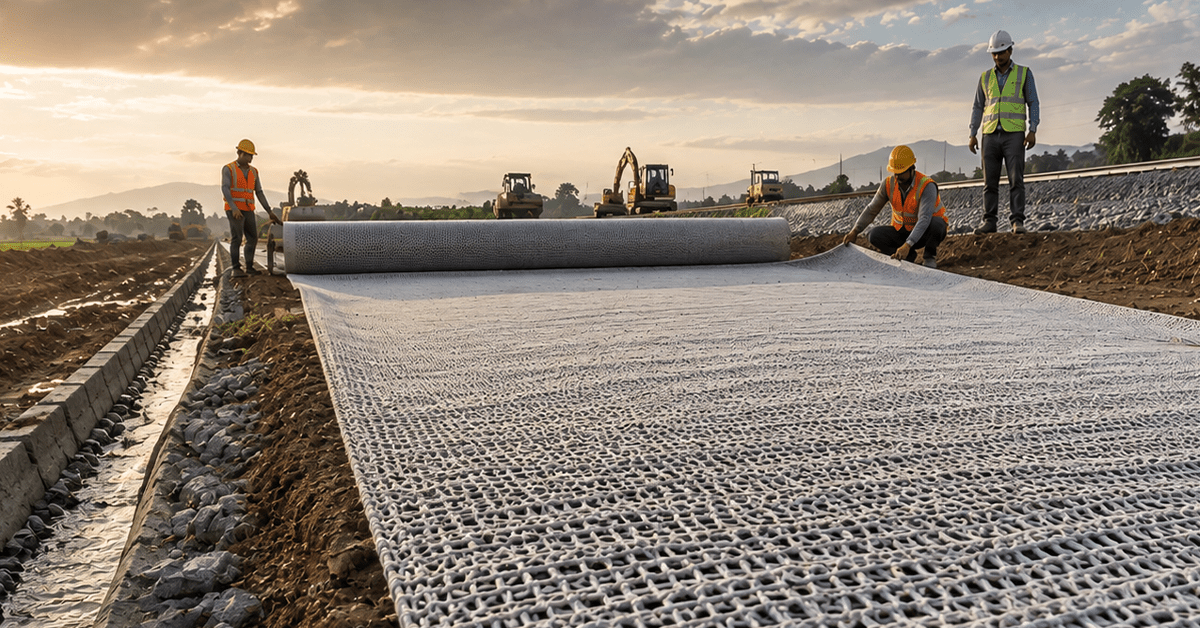
The use of geotextiles in civil engineering is quite important, for these fabrics allow soil, water, and drainage control in different building processes. Supreme Geotech produces a variety of nonwoven geotextile fabrics that can be used in soil stabilisation, filtration, drainage, separation, and erosion control applications. Being an experienced geotextile manufacturer in India, Supreme Geotech delivers geotextiles for road and railway constructions, landfills, drainage and pipeline installations, tunnels, and coast protection.
Although the range of products offered by Supreme Geotech includes nonwoven geotextiles only, getting familiar with knitted geotextiles allows differentiating between the structures of geotextiles.
What Are Knitted Geotextiles?
Knitted geotextiles are constructed using yarns that are interlocked through loops. The construction method for knitted geotextiles is different from Woven Geotextiles since woven geotextiles involve the intertwining of yarns in a regular pattern.
Through the interlocking of yarns in loops, knitted geotextiles are flexible and able to accommodate any change in the surface where they are laid.
Depending on the yarn used, knitting pattern and process of manufacture, knitted geotextiles may have different properties. The selection of the geotextile material will always depend on the purpose.
Key Features of Knitted Geotextiles
1. Flexible Structure
The looped construction allows the knit geotextile to be elastic. This enables the material to adapt to any uneven surface and also some ground movement.
Such an attribute is useful when elasticity is required, rather than rigidity.
2. Controlled Water Movement
Knitted geotextiles can create conduits for water flow depending on how they have been made. It is still necessary to manage water flows appropriately in civil engineering since water can cause the degradation of soils.
Where a project requires water filtration or drainage, it is appropriate for engineers to assess the fabric’s permeability against the project specifications.
3. Lightweight Handling
Knitted fabric may be fairly easy to install, as its flexibility will aid in managing the fabric over difficult surfaces.
But in any case, the installation team needs to follow the guidelines for handling provided by the manufacturer.
4. Adaptability
This flexibility of the knit structure makes it possible to adjust to some extent with the changes that might take place in the ground beneath. Thus, it can be used in those areas where the fabric is required to conform to the surface of the ground.
Uses of Knitted Geotextiles
Knitted geotextile fabric suitability is dependent on the particular characteristics that the material holds. These materials can be considered for use where flexibility, flow of water, or adaptability to the surface is desired.
They can be evaluated for:
1.Applications involving drainage
2.Protection of soil
3.Prevention of erosion
4.Ground separation
5.Surface stabilization
Such material can be chosen after careful consideration of soil conditions and other considerations.
How They Compare With Nonwoven Geotextiles
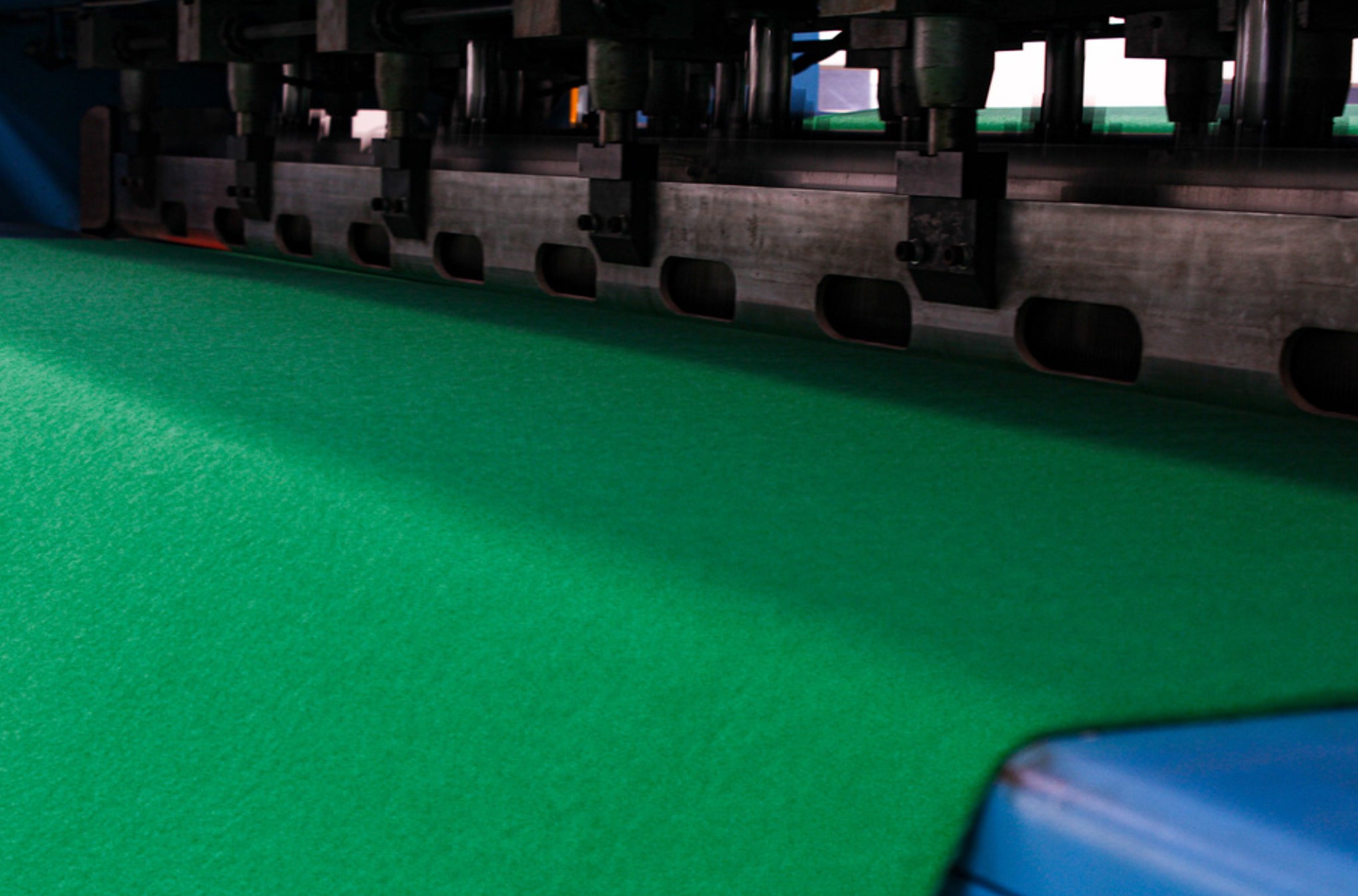
The production technique has an impact on the performance of the geotextile. The manufacture of non-woven geotextile by us is done using the needle-punching technique with polypropylene and polyester fibres.
Thus, the contractor should not choose geotextile depending on its structure alone. First, one must ascertain the requirements of the project and then choose between materials based on their specifications.
Supreme Geotech’s Approach to Geotextile Solutions
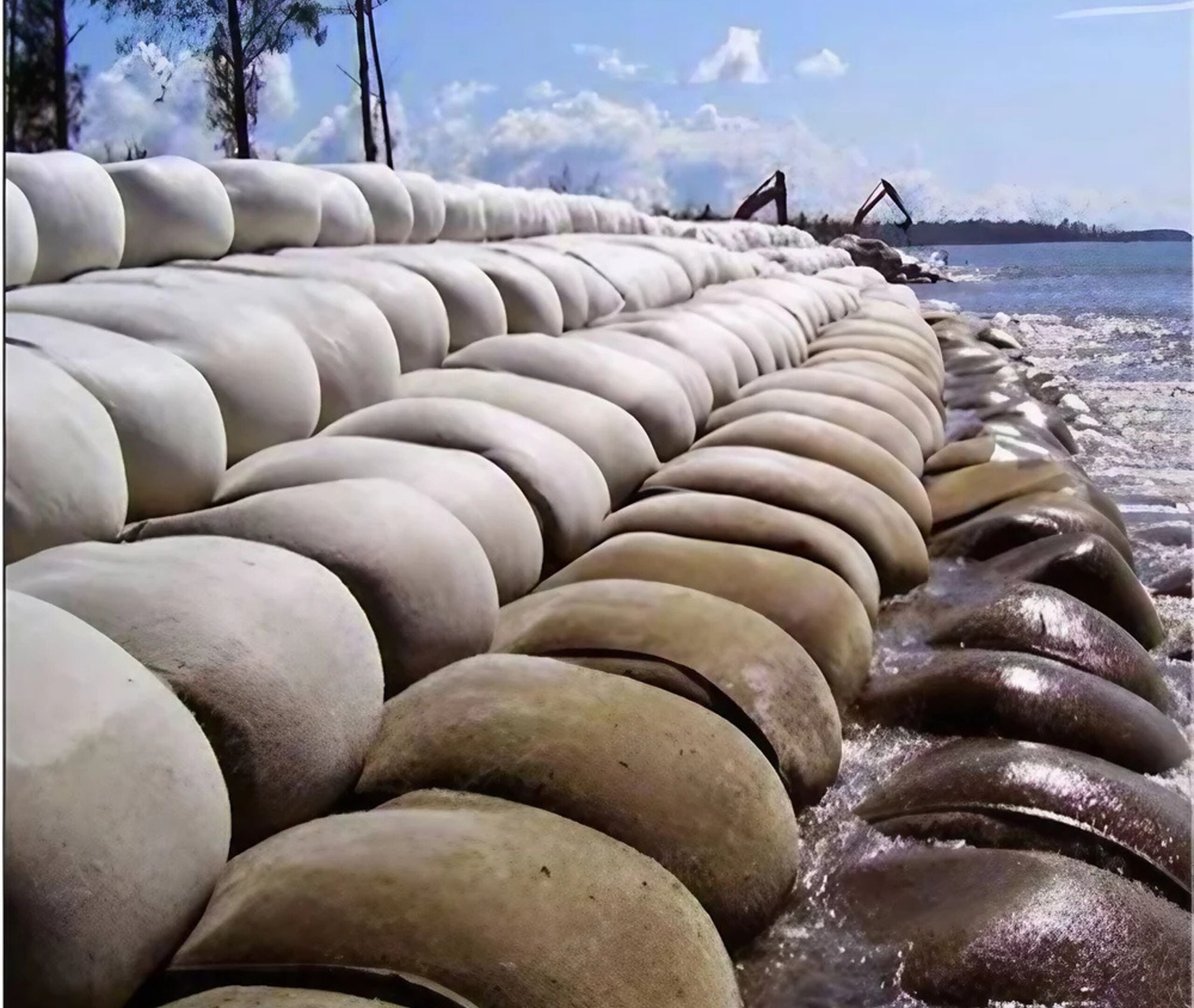
Supreme Geotech is the producer of non-woven geotextile fabric used for numerous infrastructural purposes. These are used for roads and highways, railroad tracks, French drains, landfill liners, tunnel linings, parking facilities, and protection of riverbed and coastal areas.
As the geotextile fabric producer in India, Supreme Geotech concentrates on the consistent production and quality control of our products.
Conclusion
The knitted geotextiles provide flexibility in fabric design, which can be utilised for applications needing adaptability and controlled flow of water. Nevertheless, the appropriate geotextile choice must always be based on the demands of the project itself and not on the fabric design itself.
In applications that will need non-woven geotextile materials, we provide a variety of materials suitable for filtration, drainage, separation, and soil stabilisation. The knowledge of the differences among the various geotextile designs will assist in proper material selection.
What are knitted geotextiles?
Knitted geotextiles are made up of yarn that is formed into a fabric by being connected together through interconnected loops.
What are the differences between knitted geotextiles and non-woven geotextiles?
The distinction between knitted and non-woven geotextiles is that in the case of knitted geotextiles, loops are used in the manufacturing process, while in the case of non-woven geotextiles, fibre bonding is used.
What are some applications of knitted geotextiles?
Given their physical properties, they can be used in the following constructions: drainage, soil stabilisation, erosion control, separation, and reinforcement.
What are the factors an engineer must consider before employing geotextile in construction?
Some of the factors that should be considered include the properties of soil, strength properties, permeability, loading, environmental exposure, and application.
Are knitted geotextiles suitable for all construction works?
Not really. The types of geotextiles needed for the construction vary according to the type of the construction works.