
Geotube Installation Process: A Step-by-Step Guide for Contractors
Geotube Installation Process: A Step-by-Step Guide for Contractors
There exist many cases where the use of geotubes has been employed to safeguard riverbanks, shorelines, canal banks, and other hydraulic structures against the effects of erosion. The construction of geotubes involves the use of geotextile fabric and locally available materials such as sand or soil filled into large sacks. The ability of geotubes to be permeable allows water to pass through while trapping the fill.
Supreme Geotech specialises in geosynthetic products which can be employed in erosion control, river bank protection, coastal protection, and flood control. Our geotube and geobag products are developed by using high-quality geotextile fabrics that can form protective barriers. For contractors, it is important to know about the geotube installation process.
What Are Geotubes?
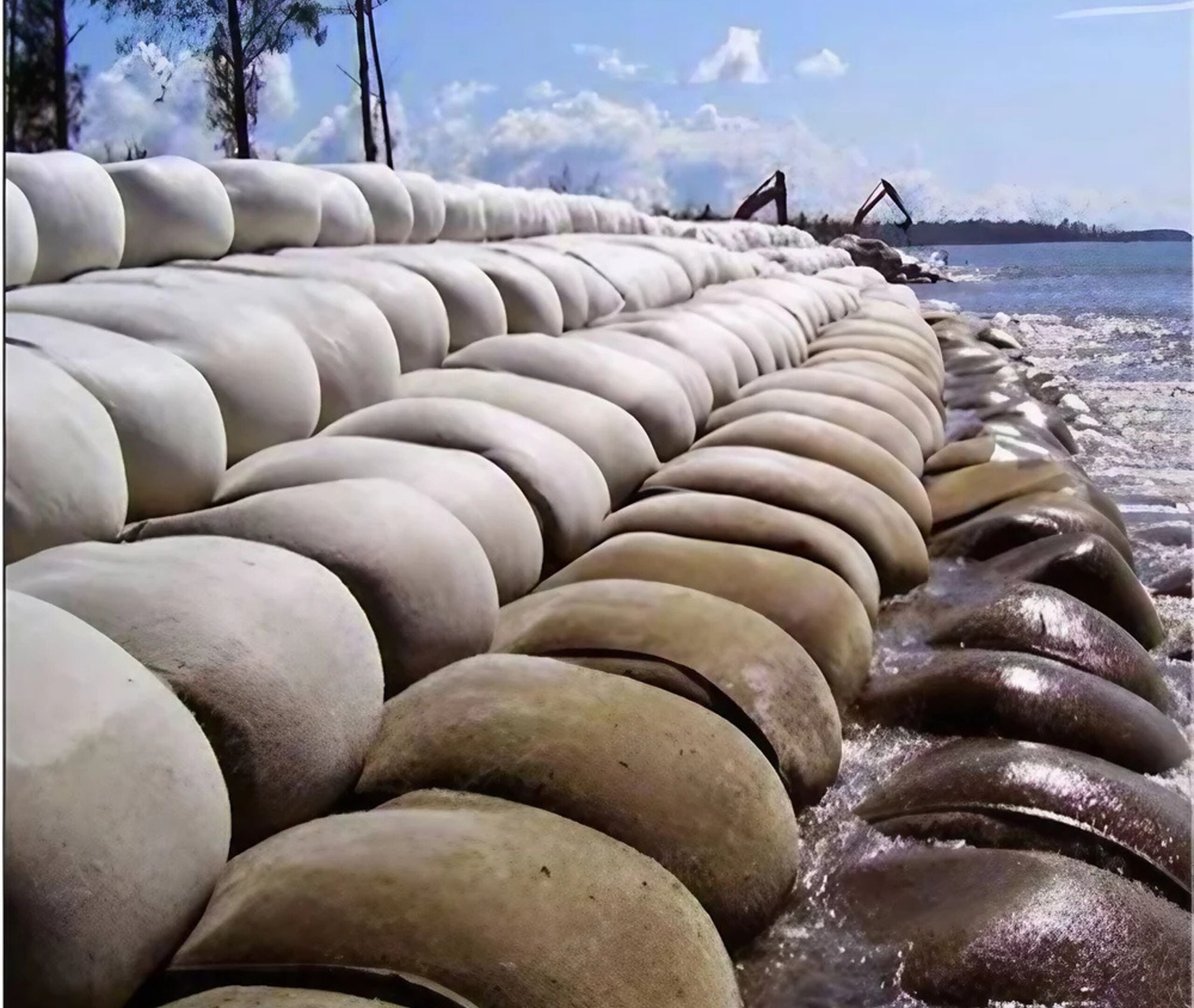
Geotubes are huge geotextile bags which are capable of carrying loads like sand or soil. After positioning them in the desired location, they will act as barriers for reducing effects from the movement of water, thus preventing soil erosion.
According to us, geotubes can be applied in areas like riverbank protection, embankment protection, flood control, canal embankments, land reclamations and hydraulic structures.
Geotube Installation Steps for Contractors
Proper installation planning can enable contractors to avoid unnecessary movement, damages, and settling. The precise layout should always be guided by the design specifications of the project.
1. Assess and Prepare the Site
The first step involves assessing the area to be filled with the geotube. The state of the soil, the water flow direction, and erosion should be assessed, in addition to space for work. The working area must be cleaned of any debris, sharp, and loose items. It should be level and firm. Step two is crucial in order to avoid surface problems that may affect the installation process of the geotextile materials.
2. Place the Geotube
The empty Geotube is put in place as per the design of the project. The bag needs to be put in place without twisting or folding.
Where wind can blow away the geotextile fabric, contractors must make sure that the fabric is fixed in place by using ballast bags or anchors.
3. Prepare the Filling Material
The material that can be used to fill the geotubes can vary depending on the requirements of the project and the suitability of the material for the intended purpose.
There is a high dependency on the availability of local material for filling purposes for the solutions provided by us for the geotubes.
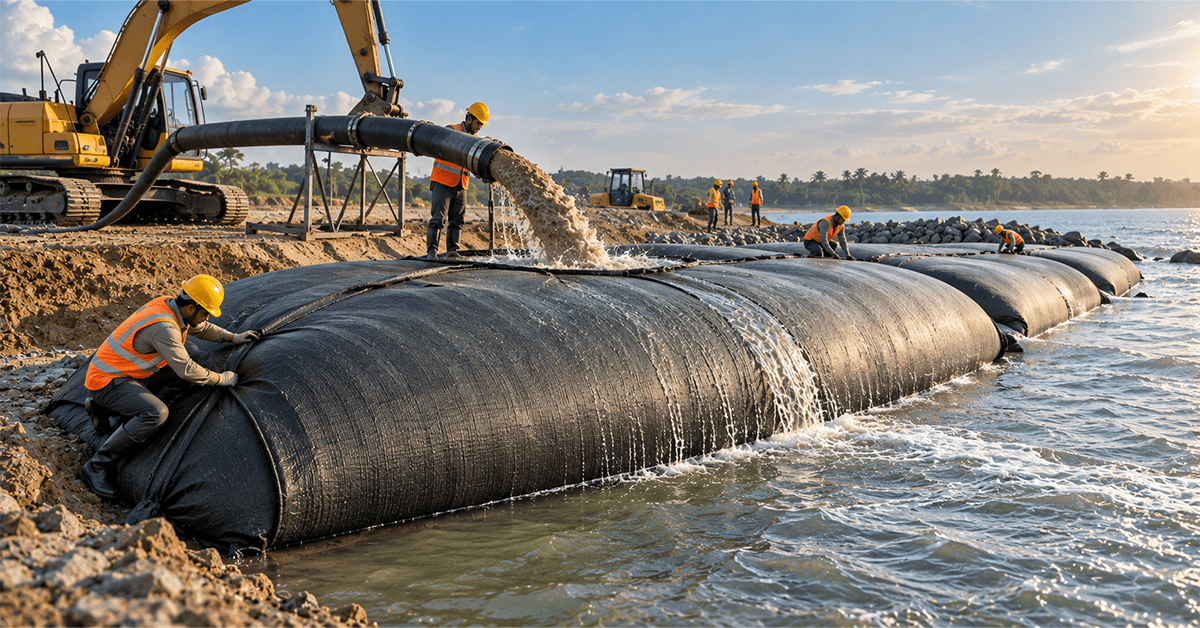
4. Fill the Geotube Evenly
The contractor will need to be vigilant throughout the filling process to ensure that the geotube maintains a consistent form and doesn’t deform too much at any particular point.
The objective is to construct a sturdy barrier but ensure that the geotextile liner is able to serve its purpose as well.
5. Allow Water to Drain
The significant features of geotextiles that are incorporated in geotubes include the ability to be permeable. In the process of filling, the water will drain from the geotextile, while the solid materials will remain inside.
This allows reducing the pressure of the water. For us, this is one of the significant features of its geotubes for hydraulic purposes.
6. Check the Installed Structure
Once the process of filling and installation is done, inspecting the geotube is very crucial. Inspecting the geotube for water flow and erosion in the surrounding areas is also vital for contractors. This becomes even more critical during and after heavy rainfall.
Geotube Installation Methods and Site Conditions
There is no one method for installing Geotube that works in every scenario. The contractor must take into account the area, the soil, the flow of water, the degree of erosion, and the reason for the installation.
In the case of riverbanks or embankments, the geotube will serve as an outer layer of protection from water flow. Along the coast, it will be used for the shoreline’s protection. In flood prevention, geotube installations can help secure vulnerable areas.
The weather needs to be considered during the process of installation as well. Strong winds can move the geotextile materials, and rain can soften the ground, making preparation difficult. We advise checking the weather and ground conditions before the installation and examining the material before covering.
Why Choose Supreme Geotech for Geotube Solutions?
We make geosynthetics that are used in difficult construction projects and for hydraulic purposes. We have our own production plant close to Kolkata, West Bengal, which has state-of-the-art production and testing facilities. The types of products that it offers include non-woven geotextiles, geotubes, and geobags, which are used for erosion prevention, draining, and protecting riverbanks and other similar functions.
We also make geosynthetics for riverbanks, coastlines, canals, floods, and land reclamation.
Conclusion
The successful geotube installation process requires careful planning even prior to bringing the geotube to the site. It is important to evaluate the ground, to prepare the area for installation, to position the geotube properly, to use the appropriate fill and to monitor the geotube during and after the filling.
We offer geotube and geobag products that will be helpful in tasks such as erosion prevention, bank stabilisation, flooding control, and other hydraulic-related tasks. When properly installed, these geotextile products can help prevent the damage from moving soil and water.
What is a Geotube?
It is a big fabric bag that is filled with sand, soil or other suitable materials and used for various purposes, such as flood control and erosion control.
Why is water drainage important in Geotube installation?
The fabric of the Geotube will let water drain out but will keep the filling material in place. It reduces the pressure of the water inside the filled tube.
Where are geotubes applied?
Geotubes can be installed for riverbank protection, coastal protection, shoreline stabilisation, flood control, canal embankments, land reclamation and construction of hydraulic structures.